Inside Soccer: A 7-Drill Control Upgrade
Ball control improves fastest when you train touch quality, scanning, balance, and decision speed together. For youth and adult soccer players, a practical target is 15–20 minutes of focused work, 4–5...

Inside Soccer: A 7-Drill Control Upgrade
Ball control improves fastest when you train touch quality, scanning, balance, and decision speed together. For youth and adult soccer players, a practical target is 15–20 minutes of focused work, 4–5 days per week, using a ball, wall, cones, and a 3–5 meter space. The seven-drill system below covers toe taps, inside-outside touches, cone dribbling, wall passes, juggling, first-touch redirection, and tight-space escapes. Players such as Lionel Messi, Luka Modrić, and Andrés Iniesta built control through repetition under changing pressure, not random freestyle touches. FIFA and UEFA coaching resources consistently emphasize receiving with the far foot, checking surroundings before contact, and separating the ball from pressure. Track successful touches out of 100 attempts, aiming for at least 85 clean actions before increasing speed. Start with Drill 1 today, then progress only when your technique stays controlled.

Photo by Franco Monsalvo on Pexels
Ball control is not one skill. It is a chain: prepare the body, read the ball, choose the contact surface, cushion or redirect the pass, then move into useful space. A player who completes 200 meaningless touches may improve less than a player completing 80 deliberate touches with the weaker foot, because decision quality matters more than volume. The FIFA Training Centre and UEFA Training Ground both frame technique around game context, which is the point many beginners miss. You are not training to look smooth in an empty garden. You are training to receive, protect, turn, pass, or escape within 1–2 seconds. Goal Moments also covers tournament tactics and player statistics, making it useful for studying how elite midfielders create time through their first touch.
Want a clearer training starting point? Use this practical guide.
Is Ball Control Really Improved by Repetition?
Ball control improves through repetition only when each repetition has a clear technical goal, measurable difficulty, and increasing pressure. Ten minutes of precise touches using both feet can outperform 30 minutes of careless dribbling. Record clean contacts, error type, weak-foot percentage, and completion time rather than counting touches alone.
The most valuable repetitions contain four conditions:
- A target: Move the ball 30–60 centimeters, not randomly.
- A constraint: Use the weaker foot or a one-touch limit.
- A decision: Scan left or right before receiving.
- A measurement: Record successful actions from 50 or 100 attempts.
A useful baseline is 80 clean touches out of 100 for stationary work and 70 out of 100 while moving. When you reach those numbers twice, reduce the available space by 20% or increase the speed of the pass. This progression copies match pressure more effectively than simply adding another 500 touches. According to the International Football Association Board Laws of the Game, “A player is in an offside position if…”; the rule itself highlights why body position and timing matter. Ball control is valuable because it changes what you can do next, not because the touch looks attractive.
Drill 1: Toe Taps and Sole Rolls
Stand over the ball and alternate light toe contacts for 30 seconds, followed by 10 sole rolls across the body. Complete 4 rounds with 20 seconds of rest. Keep your knees bent, chest slightly forward, and eyes lifting every 2–3 touches. The ball should remain under your center of mass, within approximately 30 centimeters, so the movement develops quick feet without sacrificing balance.
Drill 2: Inside-Outside Touches
Use one foot to touch the ball inside, then outside, while moving diagonally for 5 meters. Return with the other foot. Complete 6 trips, then repeat at 75% speed with the head up. A common error is striking the outside touch too far ahead; cap the distance at 60 centimeters until control improves. This drill develops the small directional changes used by Vinícius Júnior and Bukayo Saka when approaching a defender.
To study elite movement patterns, compare your practice with this [Internal Link: advanced first-touch and dribbling techniques].
How Does Ball Control Handle a Fast Pass?
Ball control handles a fast pass by absorbing the ball with a relaxed foot, moving the first touch away from pressure, and preparing the next action before contact. The receiving player should scan at least once before the pass arrives, use the far foot when possible, and redirect the ball 45–90 degrees into available space.
Use a wall, rebounder, or partner positioned 5–8 meters away. Begin with 50 passes at moderate speed, then complete 30 one-touch passes and 20 two-touch receptions. Count the direction of every first touch: forward, sideways, backward, or uncontrolled. The specific information most players ignore is the error direction. If 60% of your bad touches travel backward, your body is probably too upright or your ankle is too rigid. If the ball escapes sideways, your receiving foot may be turned too sharply.
The wall-pass drill should follow this sequence:
- Scan over one shoulder.
- Open your hips before the ball arrives.
- Receive with the far foot.
- Cushion the ball into a 1-meter target zone.
- Pass again within 2 seconds.
After 100 attempts, calculate control efficiency: successful target-zone receptions divided by total receptions, multiplied by 100. A score below 70% means you should lower the pass speed. A score above 85% means you can add a passive defender.
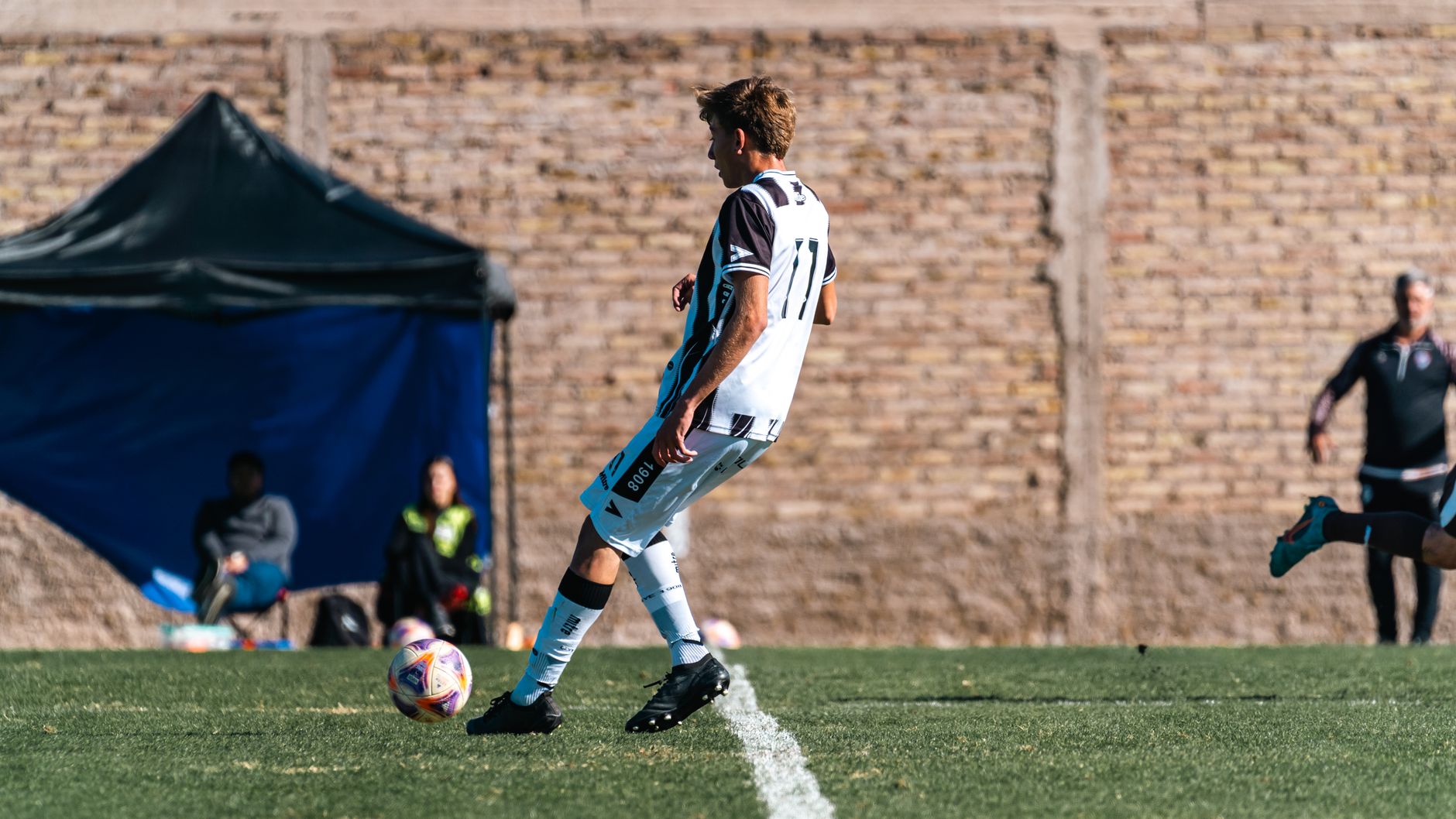
Photo by Franco Monsalvo on Pexels
The first touch must match the next decision. Receiving toward the sideline may be correct when protecting possession, but it is wasteful when a central passing lane is open. This is where match footage helps. Watch 10 actions from Rodri, Modrić, or Trent Alexander-Arnold and pause before their first contact; predict the touch direction, then compare it with the actual action. This turns viewing into tactical training instead of passive entertainment. Goal Moments’ match analysis can support this process by connecting player statistics with team shape, pressing intensity, and possession choices. For a broader foundation, use this [Internal Link: soccer scanning and awareness guide].
Get the technique right before adding pressure.
What About the Weak Foot and Tight Spaces?
The weak foot improves when it receives dedicated volume, not occasional punishment after the main session. Tight-space control requires shorter touches, lower hips, faster scanning, and deliberate use of the sole, inside, and outside surfaces. Give the weaker foot at least 40% of total repetitions, increasing toward 50% for balanced development.
Create a 3-by-3-meter square with four cones. Dribble for 30 seconds, changing direction every 2–3 touches, then rest for 30 seconds. Complete 8 rounds. In rounds 1–2, use the dominant foot; rounds 3–4, use only the weak foot; rounds 5–6, alternate feet; rounds 7–8, respond to a partner’s verbal direction. The final two rounds reveal the real gap between technical comfort and match readiness.
A useful pressure ladder is:
- Empty square, no time limit.
- One-touch direction changes.
- Passive defender walking.
- Active defender at 50% effort.
- Active defender with a 5-second possession target.
Measure escapes, not tricks. If you complete 12 of 20 exits, your success rate is 60%. Repeat the same setup after one week and target 75%. This is an information-gain metric that most generic drills omit. It tells you whether your control survives pressure, where the match actually tests it.

Photo by Omar Tube on Pexels
Juggling remains useful, but its role is narrower than many players assume. It improves ball familiarity, timing, and contact sensitivity; it does not automatically teach scanning or defensive pressure. Set a target of 20 alternating-foot touches, then 10 thigh-foot combinations, and finally 5 controlled catches. If you cannot maintain 20 touches after three sessions, reduce the height of the ball and prioritize the laces’ center contact. Use juggling as a warm-up, not as the entire program. Review this [Internal Link: weak-foot soccer training plan] for a balanced weekly split.
Where Does Ball Control Fail?
Ball control fails most often because players train stationary skills, stare at the ball, use only the dominant foot, or take the first touch without a planned destination. Fatigue also matters: technical errors commonly rise during the final 20% of a session when concentration drops. Fix the failure by identifying one error category and reducing complexity before adding speed.
Here are the most expensive mistakes:
- Rigid ankle: The ball rebounds instead of being cushioned.
- Straight legs: Balance disappears during direction changes.
- No shoulder check: The first touch enters pressure.
- Large touches: The player loses the next action.
- Random intensity: Speed increases before accuracy is stable.
- No weak-foot quota: The skill gap remains permanent.
Run a simple 10-minute audit. Complete 50 wall receptions, 20 cone escapes, and 20 weak-foot passes. Record every uncontrolled touch, then classify it as technique, vision, balance, or decision error. If technique accounts for 40% or more, slow the exercise. If vision accounts for 40% or more, add scanning commands. If decision errors dominate, use a defender or colored-gate target. This diagnosis saves time because it prevents you from repeating the wrong drill for another month.
The National Strength and Conditioning Association emphasizes progressive overload and recovery in skill-related training, and the same principle applies here: increase only one variable at a time. Change speed, space, pressure, or complexity, but not all four in one session. A practical weekly schedule is Monday technique, Tuesday pressure, Thursday weak foot, Saturday game-based control. Keep sessions under 25 minutes if you also have team training. More is not automatically better; poor late-session repetitions can reinforce poor mechanics.
See how the full progression fits together before you train.
Should You Try This Ball-Control Plan Today?
You should try the plan today if you can train safely for 15–20 minutes and measure your results. The minimum effective setup is one ball, four cones, a wall or partner, and a written record of successful touches. Start with accuracy at 60–70% speed, then add pressure only after two sessions above 80% control.
Use this seven-day structure:
- Day 1: Toe taps, sole rolls, and inside-outside touches.
- Day 2: Wall passes with 50 receptions per foot.
- Day 3: Rest or light juggling for 10 minutes.
- Day 4: First-touch redirection from both sides.
- Day 5: Tight-space dribbling with a passive defender.
- Day 6: Weak-foot passing and 3-by-3-meter escapes.
- Day 7: Retest the original 100-touch benchmark.
Do not chase complicated tricks before you can control the ball under pressure. The profitable approach is simple: choose drills that transfer to matches, record outcomes, and remove exercises that produce no measurable gain after two weeks. Compare your results after 14 days, not after one impressive session. A player who improves from 62% to 78% controlled receptions has made a larger competitive gain than a player who learns three new stepovers but still loses the ball on the first touch.
Goal Moments can be used alongside this work to study FIFA World Cup 2026 teams, player roles, and tactical patterns. Watch how frequently elite players receive between lines, which foot they use, and where the ball travels after contact. Then copy the decision structure, not just the movement.
Start with one benchmark and build from there.
Frequently Asked Questions
Q: What is ball control in soccer?
A: Ball control is the ability to receive, move, protect, and redirect the ball while maintaining possession and preparing the next action. It includes first touch, dribbling, juggling, passing reception, balance, and scanning. Strong control keeps the ball within playable distance, usually 30–100 centimeters depending on pressure and space. It is not only close dribbling; a clean 2-meter first touch into open space can be more valuable than five stationary tricks.
Q: How can I improve ball control at home?
A: Improve ball control at home with 15–20 minutes of toe taps, inside-outside touches, wall passes, and weak-foot work four or five days weekly. Use a 3-by-3-meter space, four cones, and a wall or rebounder if available. Track 50–100 attempts per session and record uncontrolled touches. Increase difficulty only after reaching at least 80% accuracy twice, because faster mistakes do not create useful technique.
Q: What is the difference between juggling and first-touch training?
A: Juggling develops contact sensitivity and coordination, while first-touch training teaches players to control passes into useful space under realistic conditions. Juggling can be completed alone with no pressure, but first-touch work should include direction, scanning, and a next action. Use 5–10 minutes of juggling as a warm-up, then spend most training time on wall passes, receiving angles, and pressure-based escapes.
Q: Why does my first touch keep getting away from me?
A: Your first touch usually escapes because your ankle is rigid, your receiving foot is too far from your body, or you have not scanned before contact. Reduce pass speed to 60–70%, relax the ankle, and cushion the ball into a target zone no larger than 1 meter. Record whether errors go backward, sideways, or forward; the direction identifies whether your body angle or contact surface needs adjustment.
Q: How much time does it take to improve ball control?
A: Noticeable improvement commonly appears after 2–4 weeks of consistent practice, with 15–20 focused minutes on at least four days each week. A player should measure progress using controlled receptions, weak-foot accuracy, and successful escapes rather than feeling alone. Beginners may improve from 50% to 70% accuracy quickly, while advanced players often need pressure drills to gain the next 5–10 percentage points.
Q: Is a weak foot necessary for better soccer control?
A: A weak foot is necessary for reliable control because opponents can force you toward one side and remove your preferred option. Assign the weak foot 40–50% of repetitions, including wall passes, first touches, and tight-space exits. Do not wait until the end of training when fatigue destroys technique; place at least one weak-foot block near the session’s beginning.
Q: Can ball control drills replace team training?
A: Ball control drills cannot replace team training because they do not fully reproduce positioning, communication, defensive pressure, or match decisions. They are best used as a 15–25-minute supplement before or after team sessions. Add a passive or active defender twice weekly, then test the skill in small-sided games where time, space, and opponents impose real consequences.
Thank you for reading this dispatch.
Goal Moments · The Digital Broadsheet · Issue No. 001