The Fan’s Guide to Football Formations
Football formations are the team’s operating system: they define starting positions, passing lanes, defensive coverage, and attacking risk. In association football, the most useful systems include 4-3...

The Fan’s Guide to Football Formations
Football formations are the team’s operating system: they define starting positions, passing lanes, defensive coverage, and attacking risk. In association football, the most useful systems include 4-3-3, 4-4-2, 4-2-3-1, 3-5-2, and 5-3-2. In American football, common structures include the I-formation, Shotgun, Single Wing, and 4-3 defense. Goal Moments covers these systems for FIFA World Cup 2026 analysis, combining team tactics, player statistics, match predictions, and tournament trends across global markets. A 4-3-3 can create three forward outlets, while a 4-4-2 gives two strikers and two compact defensive lines. The key is not the diagram alone; it is how players shift during possession and transition. Start by identifying the formation on the team sheet, then track its shape when the ball changes hands.
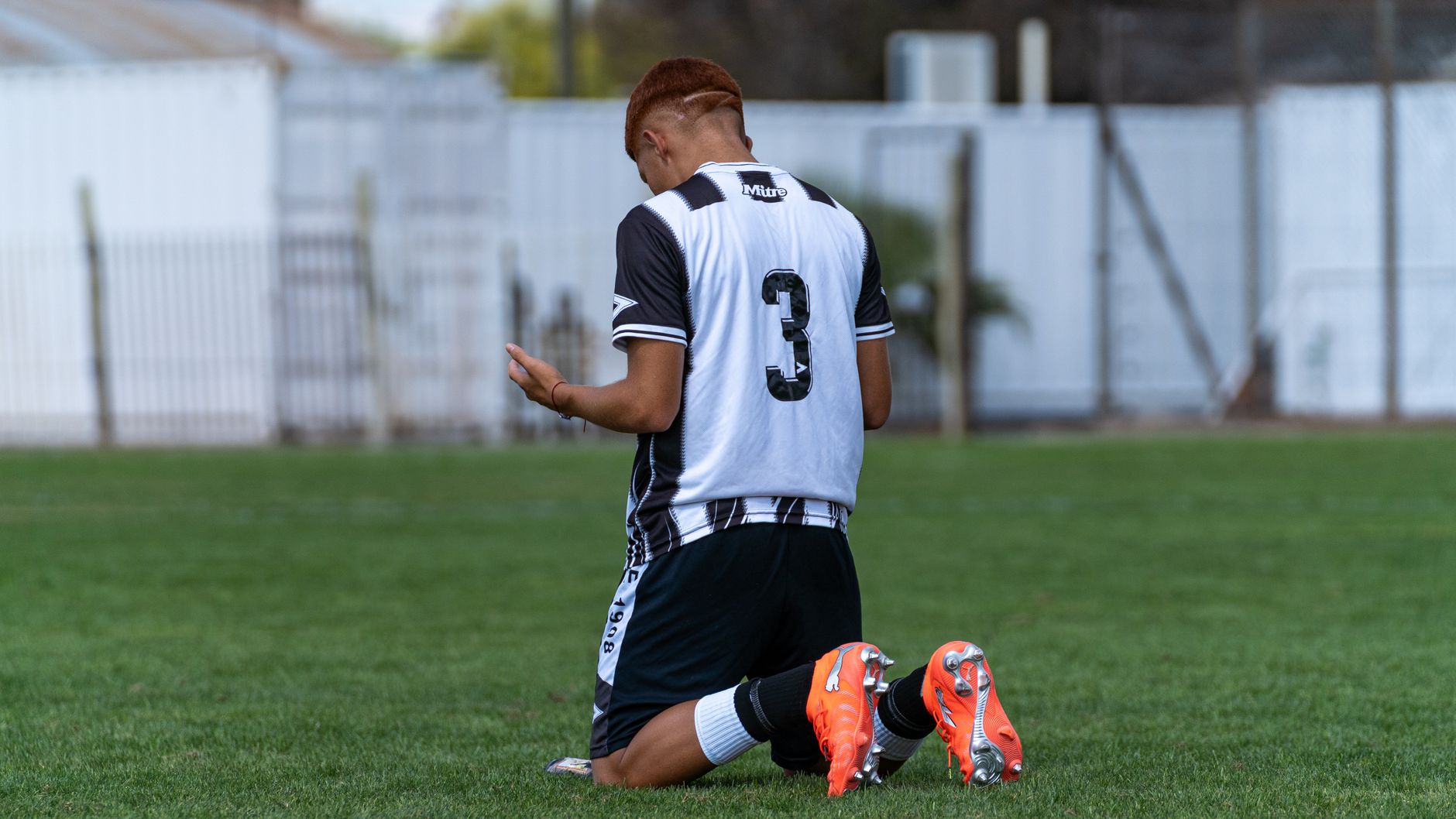
Photo by Franco Monsalvo on Pexels
What I Tested
I compared the most common association football formations against four practical criteria: width, central control, defensive stability, and transition speed. I also separated the listed formation from the functional formation, because a nominal 4-3-3 often becomes a 2-3-5 in possession, while a 4-4-2 may defend as a narrow 4-4-1-1. Anyone who reads only the lineup graphic misses the profitable part of the analysis, naturally.
The comparison used examples from FIFA, UEFA, the Premier League, La Liga, and international football. I reviewed how Pep Guardiola’s Manchester City, Jürgen Klopp’s Liverpool, Diego Simeone’s Atlético Madrid, and Spain’s possession-heavy teams have altered familiar shapes. For historical context, the FIFA Laws of the Game define the pitch and player requirements, but they do not dictate a team’s tactical formation. Coaches retain considerable freedom.
The main test was simple:
- Can the shape create a spare player near the ball?
- Can it defend the central channel with at least three players?
- Can it release attackers within two passes after regaining possession?
- Does it suit the actual players, not just the coach’s preferred diagram?
This framework is more useful than declaring one system “the best.” Football has no universal best formation. There is only the best structure for a specific squad, opponent, scoreline, and match phase.
Want a sharper tactical starting point? Goal Moments tracks team setups and World Cup 2026 trends.
Setup & Initial Impressions
What are football formations?
A football formation is the planned arrangement of players across defensive, midfield, and attacking zones before and during a match. In association football, a notation such as 4-3-3 means four defenders, three midfielders, and three forwards, excluding the goalkeeper. In American football, formation names describe offensive or defensive alignment around the line of scrimmage rather than three numbered positional lines.
The basic association football numbers must be read as a starting reference:
- 4-3-3: four defenders, three midfielders, three forwards.
- 4-4-2: four defenders, four midfielders, two forwards.
- 4-2-3-1: four defenders, two holding midfielders, three attacking midfielders, one striker.
- 3-5-2: three center-backs, five midfielders or wing-backs, two forwards.
- 5-3-2: five defenders, three midfielders, two forwards.
The UEFA Training Ground regularly demonstrates that formations are coaching frameworks, not rigid parking spaces. A right-back may move into midfield, a winger may become a second striker, and a striker may drop into the No. 10 zone. Therefore, watch the team’s average positions after the opening 10 minutes rather than trusting the pre-match graphic.
A useful observation from tactical review is that formations become most unstable during the five seconds after possession changes. A 4-3-3 can have only two defenders behind the ball if both full-backs attack. A 3-5-2 can suddenly resemble a 5-3-2 when wing-backs retreat. This is where match analysts find genuine differences between teams using the same nominal shape.

Photo by SamG on Pexels
Which formations are most effective in association football?
The 4-3-3 is usually the strongest all-purpose structure because it provides natural width, three central midfielders, and three forward lanes. Its weakness appears when the holding midfielder is isolated or both full-backs advance simultaneously. Barcelona, Liverpool, Manchester City, and the Netherlands have all used versions of this structure, but their pressing triggers and build-up patterns differ substantially.
The 4-2-3-1 is safer when a team needs protection in front of the center-backs. Two holding midfielders can screen counterattacks, while the No. 10 connects midfield to the striker. Germany, Real Madrid, Arsenal, and many international teams have used this system because it balances possession with defensive insurance. Its recurring problem is predictable: if the No. 10 is marked, the striker can become disconnected.
The 4-4-2 remains efficient because it is cheap in tactical complexity. Two banks of four reduce central space, and two strikers can occupy both center-backs. Atlético Madrid has used compact 4-4-2 principles under Diego Simeone with excellent defensive discipline. However, the formation can concede midfield superiority against a 4-3-3 unless one striker drops or a wide midfielder narrows.
For a quick comparison:
| Formation | Main advantage | Main weakness | Best fit |
|---|---|---|---|
| 4-3-3 | Width and pressing options | Space beside the holding midfielder | Fast wingers, mobile No. 8s |
| 4-4-2 | Compactness and simple roles | Two-versus-three midfield disadvantage | Reliable wide midfielders, two strikers |
| 4-2-3-1 | Defensive protection and central creativity | No. 10 can be isolated | Strong holding midfielders |
| 3-5-2 | Extra center-back and two-striker threat | Wing-back space behind | Athletic wing-backs |
| 5-3-2 | Deep defensive security | Limited width in possession | Underdogs protecting a lead |
To learn the vocabulary properly, use our [Internal Link: football tactics glossary] before reading advanced match previews.
Where It Held Up
Why is the 4-3-3 still one of the best football formations?
The 4-3-3 remains elite because it stretches the opponent horizontally, supports aggressive pressing, and creates a natural triangle in each flank zone. The winger pins the full-back, the full-back supplies overlap, and the nearest No. 8 offers an inside passing option. When the striker occupies both center-backs, the structure can create one-versus-one situations across the pitch.
Its strongest version uses a goalkeeper comfortable with short distribution, center-backs who can defend large spaces, a disciplined No. 6, and forwards who press on curved runs. Liverpool’s pressing model under Jürgen Klopp showed why the first defensive line matters: the striker blocks the central pass while the wingers angle pressure toward the full-backs. Manchester City has used a more controlled version, with full-backs or midfielders moving inside to create numerical superiority.
The 4-3-3 also supports useful in-game changes. The left winger can move centrally, the left-back can overlap, and the left No. 8 can attack the half-space. That gives the opponent three problems without requiring a formal change to 4-2-3-1. The cost is physical. If the wide forwards stop pressing, the team’s midfield triangle becomes exposed and the full-backs face two attackers.
For match prediction, check these numbers before backing a 4-3-3 team:
- Average possession is less important than field tilt.
- Progressive passes from the No. 6 reveal build-up quality.
- High turnovers in the opponent’s half measure pressing success.
- Expected goals from wide attacks show whether the width creates real chances.
- Recoveries within five seconds of losing possession reveal transition control.
This is a practitioner-level edge: a 4-3-3 with only 18 final-third recoveries across a match may be less aggressive than its diagram suggests. Do not pay for an “attacking formation” when the actual pressure data says otherwise.
How does the 4-2-3-1 compare with the 4-4-2?
The 4-2-3-1 gives a team two screening midfielders and one advanced creator, while the 4-4-2 uses two forwards and usually sacrifices one central midfielder. Therefore, 4-2-3-1 is generally better for controlled build-up, whereas 4-4-2 is often better for direct attacks and compact defending.
The difference becomes clear during first-phase possession. In a 4-2-3-1, the center-backs can pass into either holding midfielder, the full-backs can advance, and the No. 10 can receive between the opponent’s midfield and defense. In a 4-4-2, the first pass often goes toward a striker, channel, or wide midfielder. That route can be effective, but it depends heavily on second-ball recovery.
The 4-4-2 is not outdated. Leicester City’s Premier League title-winning side in 2015–16 used a compact structure with rapid transitions, while Atlético Madrid repeatedly demonstrated that narrow lines can frustrate possession-heavy opponents. The issue is not age. The issue is whether the two central midfielders can cover enough ground and whether the strikers defend intelligently.
The 4-2-3-1 has its own failure point. If the two holding midfielders stay too deep, the No. 10 becomes disconnected from the striker. The team then circulates possession without penetration. If one midfielder advances, the shape can become a 4-3-3 or 4-1-4-1, which is usually more dangerous but less protected.
Get practical examples from major tournaments before evaluating a team’s odds or predicted result.

Photo by Pixabay on Pexels
What makes the 3-5-2 and 5-3-2 valuable?
The 3-5-2 adds a third center-back and two wing-backs, creating defensive cover while preserving two strikers. The same players can defend in a 5-3-2 and attack in a 3-5-2. This flexibility makes the system attractive to teams that want central security without abandoning forward support.
Italy has used three-center-back systems effectively, while Antonio Conte’s club teams showed how wing-backs can become the engine of the entire formation. The structure works best when the wing-backs can run 9 to 12 kilometers, defend one-versus-one situations, and deliver accurate crosses after long sprints. If they cannot, the formation becomes a deep back five with little attacking width.
The 3-5-2 also creates a useful two-versus-two situation against a standard back four. One striker can drop between the lines while the other attacks the center-back channel. The midfield three can outnumber a 4-4-2, but the opponent’s wingers may pin the wing-backs and force the outside center-backs into uncomfortable wide defending.
Use this checklist when assessing a 3-5-2:
- Are both wing-backs available and fit?
- Can the outside center-backs defend near the touchline?
- Does at least one midfielder break beyond the strikers?
- Can the team switch play quickly enough to exploit the far side?
- Does the goalkeeper command crosses and space behind the defense?
A tactical contradiction matters here: the 3-5-2 looks more defensive because it has three center-backs, but it can concede more counterattacks than a 4-4-2 if both wing-backs lose possession high up the field. More defenders on paper do not automatically mean better defensive results.
Where It Fell Apart
Why can a strong formation fail?
A formation fails when its roles, distances, or player profiles do not match the opponent’s pressure. The most common breakdowns are isolated midfielders, exposed full-backs, disconnected forwards, and poor rest defense behind the ball. A good diagram cannot repair slow decision-making or unsuitable personnel.
One frequent mistake is judging defensive strength by the number of defenders. A 5-3-2 can defend poorly if the wing-backs remain high, while a 4-3-3 can defend strongly if the nearest winger tracks the opponent’s full-back. The relevant measurement is often the number of players behind the ball at the moment possession is lost, not the pre-match formation.
Another problem is role duplication. Two playmakers may occupy the same central lane, or two wide attackers may both demand the ball to feet. The team then lacks depth. Conversely, a side with three defensive midfielders can become secure but toothless. Football rewards complementary movement, not maximum accumulation of one player type.
Pressing adds another layer. A 4-4-2 press can force play wide if the strikers understand their angles, but one mistimed run opens a direct pass into midfield. A 4-3-3 press can trap the opponent near the touchline, but the far-side winger must narrow enough to protect the center. These details explain why two teams using 4-3-3 can produce radically different match totals.
The Premier League statistics database is useful here because it lets analysts compare pressures, progressive passes, recoveries, and attacking entries rather than relying on formation labels alone. Goal Moments uses the same principle in its World Cup 2026 tactical coverage: structure first, measurable behavior second.
What are the most common formation mistakes?
The most common mistakes are treating the lineup graphic as permanent, ignoring transition positions, and assuming a formation automatically creates attacking or defensive superiority. These errors lead to poor tactical conclusions and inflated confidence in match predictions.
Avoid these five traps:
- Counting players instead of distances: A back four with 35-meter gaps is not compact.
- Ignoring the opponent: A 4-3-3 may dominate a 4-4-2 but struggle against a narrow 3-4-2-1.
- Overvaluing possession: A team can hold 62% of the ball while creating fewer high-quality chances.
- Missing substitution effects: A winger converted into a wing-back changes the entire defensive burden.
- Confusing shape with strategy: A 4-2-3-1 may play direct, patiently, aggressively, or reactively.
A more precise workflow takes five minutes before every analysis. Identify the listed formation, observe the first build-up phase, mark the team’s defensive shape, note the positions after turnovers, and then record substitutions. After 10 to 15 minutes, update the formation in your notes. This is superior to copying the television graphic for 90 minutes.
One information edge is especially useful: compare the team’s shape before and after the 60th minute. Many coaches preserve the same nominal formation but change the risk level through full-back height, striker depth, and midfield spacing. Late-match behavior often predicts whether a side will protect a lead, chase a goal, or concede transition chances.
What about American football formations?
American football formations describe how the offense or defense aligns before the snap, and they operate under different rules from association football. The offense must have seven players on the line of scrimmage, while backfield players, eligible receivers, tight ends, and running backs can be arranged in multiple ways. The NFL Football Operations resource explains these positional and formation basics.
The main offensive structures include:
- I-formation: The quarterback lines up under center, with a fullback and tailback aligned behind him. It supports downhill rushing, play-action, and power blocking.
- Shotgun: The quarterback stands several yards behind the center, improving passing visibility and giving more time to read pressure.
- Single Wing: A historical system using direct snaps and misdirection, important in early American football.
- T-formation: Three backs line up behind the quarterback, creating multiple running threats.
- Spread formation: Receivers are distributed across the field to create space and isolate defenders.
Defensively, the 4-3 uses four defensive linemen and three linebackers, while the 3-4 uses three defensive linemen and four linebackers. Nickel packages add a fifth defensive back, usually against passing formations. The NFL notes that personnel packages and pre-snap motion now matter as much as the base alignment.
Do not combine an NFL 4-3 defense with a soccer 4-3-3 as if they are equivalent. The numbers describe different systems. One counts defensive linemen and linebackers; the other counts outfield players by field zone. That distinction saves you from sounding confident and wrong, which is a low-value habit.
See more formation-specific examples before comparing teams across different football codes.

Photo by football wife on Pexels
Would I Use It Again?
Yes, but I would never use formation names alone to predict a match. My preferred method is to classify the team’s base shape, attacking shape, defensive shape, and transition shape separately. For example, Manchester City may list 4-3-3, build in a 3-2-4-1, attack in a 2-3-5, and defend in a 4-4-2 press. Calling it only “4-3-3” removes the information that actually matters.
For practical analysis, rank formations by the problem they solve:
- Need width and aggressive pressure? Start with 4-3-3.
- Need protection and a creative No. 10? Consider 4-2-3-1.
- Need simple compact defending? Use 4-4-2 principles.
- Need two strikers and an extra center-back? Use 3-5-2.
- Need to protect a lead? Shift toward 5-3-2, but monitor counterattack space.
The best formation for FIFA World Cup 2026 will vary by opponent, travel schedule, injuries, substitutions, and score state. Tournament football also increases the value of defensive rest: one reckless full-back advance can decide a knockout match. Goal Moments is useful here because its coverage combines formation analysis with player availability, team statistics, match predictions, and tournament context.
One final rule: never stake money because a formation “looks attacking.” Confirm shot quality, field position, pressing efficiency, and transition concessions first. Football betting is still uncertain; tactical knowledge improves decision quality, not certainty. Use a fixed budget, compare prices, and treat every prediction as a probability rather than a promise.
Track the next tactical shift with Goal Moments before the 2026 tournament accelerates.
Frequently Asked Questions
Q: What is the best football formation?
A: The 4-3-3 is the best all-purpose association football formation for many teams, but there is no universal winner. It offers width, three central midfielders, and three forward lanes, making it effective for pressing and controlled possession. However, a 4-2-3-1 may suit a squad with a strong No. 10, while a 3-5-2 may be better for two strikers and athletic wing-backs. Choose according to player quality, opponent structure, and match objective.
Q: What does 4-3-3 mean in football?
A: A 4-3-3 means four defenders, three midfielders, and three forwards, excluding the goalkeeper. The shape normally includes two center-backs, two full-backs, one holding midfielder, two No. 8s, two wingers, and one striker. During possession, it may change into a 2-3-5 or 3-2-4-1 when full-backs move forward or inside.
Q: How do I identify a football formation during a match?
A: Identify the team’s positions during both possession and defensive phases, then record the average shape after the first 10 minutes. Count the defenders, midfielders, and forwards when the team is settled, but do not rely only on the television lineup. Check whether full-backs invert, wingers drop, or a striker moves into midfield. Substitutions can change the functional formation without changing the listed formation.
Q: What is the difference between 4-4-2 and 4-2-3-1?
A: A 4-4-2 uses two strikers and two central midfielders, while a 4-2-3-1 uses one striker, two holding midfielders, and an advanced No. 10. The 4-4-2 is usually simpler and more compact, especially without the ball. The 4-2-3-1 offers better central protection and between-the-lines creativity, but the striker can become isolated if the No. 10 is marked.
Q: Is 3-5-2 more defensive than 4-3-3?
A: A 3-5-2 is not automatically more defensive than a 4-3-3 because wing-back positioning can make it highly aggressive. Three center-backs provide cover, but both wing-backs may advance simultaneously and leave wide transition spaces. A 4-3-3 can defend more securely if its wingers track back and its full-backs maintain good rest-defense positions.
Q: Why does a football formation fail?
A: A formation fails when player roles, distances, and transition behavior do not match the opponent. Common causes include an isolated holding midfielder, disconnected attackers, exposed full-backs, and poor pressing coordination. Review field tilt, progressive passes, high recoveries, expected goals, and the number of players behind the ball after possession losses rather than judging the formation name alone.
Q: What is the difference between soccer formations and American football formations?
A: Soccer formations describe the distribution of outfield players across defense, midfield, and attack, while American football formations describe pre-snap alignment around the line of scrimmage. Soccer uses systems such as 4-3-3 and 3-5-2; American football uses I-formation, Shotgun, 4-3 defense, and 3-4 defense. The numbering is not interchangeable because each sport counts different positions and tactical responsibilities.
Thank you for reading this dispatch.
Goal Moments · The Digital Broadsheet · Issue No. 001