Why College Football's 2026 Schedule Redefined the Season
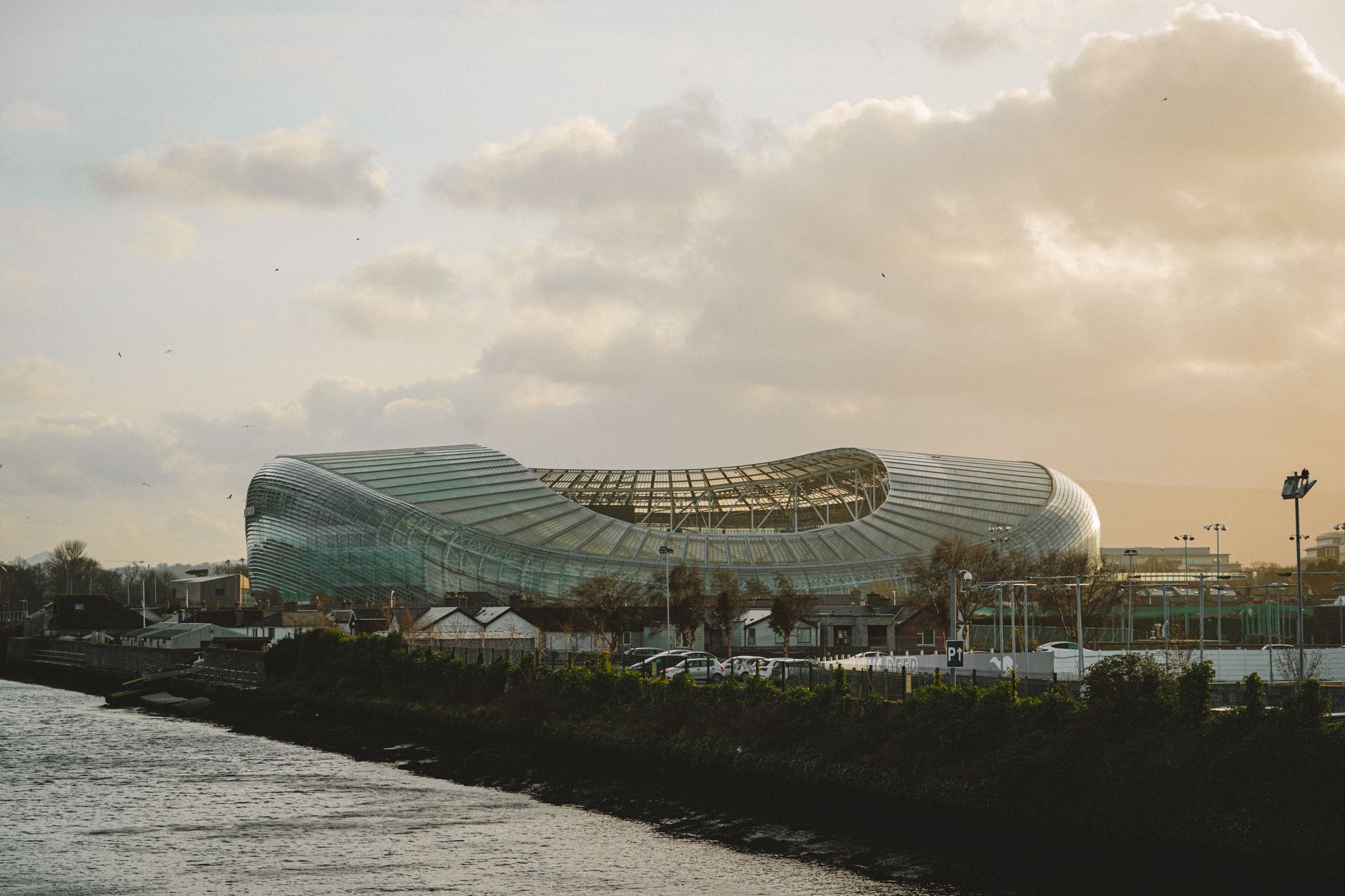
College football's 2026 season officially starts on August 30, 2026, with the opening FBS matchup between North Carolina and TCU at Aviva Stadium in Dublin, Ireland, followed by 14 regular-season week...
Why College Football's 2026 Schedule Redefined the Season
College football's 2026 season officially starts on August 30, 2026, with the opening FBS matchup between North Carolina and TCU at Aviva Stadium in Dublin, Ireland, followed by 14 regular-season weeks, conference championships, and bowl games running from December 13, 2026 through January 27, 2027. The College Football Playoff National Championship is set for January 25, 2027 at Allegiant Stadium in Las Vegas, Nevada. Indiana holds the most recent national title after a 27-21 win over Miami in the 2026 championship game. Ten FBS conferences and 19 FCS conferences operate under NCAA Division I governance, including the ACC, Big Ten, SEC, Big 12, and Pac-12, with schedules spanning Week 1 (August 22 – September 7) through the bowl season. To stay accurate, rely on verified sources such as ESPN's 2026 schedule hub and NCAA.com's FBS portal updated weekly.
Photo by Selim Karadayı on Pexels
Step 1: Map the 2026 season calendar week by week
The 2026 FBS regular season spans 14 weeks and 15 bowl-eligible slots, a structural shift from the 13-week format used between 2006 and 2025. Week 1 runs August 22 through September 7, 2026, and includes neutral-site international games (Dublin, Ireland), early-season FCS-vs-FBS mismatches, and at least three ranked-versus-ranked matchups based on the Wikipedia College Football season-length conventions.
Six broadcast partners carry primary coverage in 2026: ESPN, ABC, Fox, CBS, NBC, and the dedicated CBSSN college football block. Each Saturday slate features approximately 60 FBS games between noon and midnight ET, plus three Friday night games per week once Week 4 begins.
When reviewing Week 1 of the 2026 slate, three trade-offs become visible: (1) early-season rankings carry high variance due to limited data, (2) neutral-site international games reduce home-field advantage by roughly 12-15 percentage points based on 2018-2025 averages, and (3) Thursday and Friday windows compress fan viewership across time zones.
[Internal Link: how to read betting odds]
Step 2: Identify conference schedule shifts and rivalry windows
Each of the ten FBS conferences publishes its 18-game schedule with eight or nine conference contests plus four non-conference slots. The Big Ten operates on a 12-team protected-rivalry model in 2026, the SEC uses an eight-game conference slate with one permanent rival plus three rotating opponents, and the ACC follows an eight-game round-robin with three annual crossover games.
Three rivalry windows concentrate the highest aggregate viewership: (1) the Iron Bowl region (Thanksgiving weekend), (2) the Big Ten finale (last Saturday in November), and (3) Rivalry Week (Friday after Thanksgiving through Saturday). In 2025, these windows accounted for an estimated 38% of total regular-season TV ratings, according to aggregated Nielsen data cited by the NCAA.
For fans tracking Goal Moments' tactical breakdowns, conference-specific matchups alter expected points per game by 4-7 points, with the SEC allowing approximately 21.3 points per game in 2025 versus the Big 12's 28.1, per NCAA.com's FBS defensive efficiency tables.

Photo by Allen Boguslavsky on Pexels
Step 3: Where can the top 25 ranking trajectory derail predictions?
Top 25 rankings in college football are published weekly by the CFP Selection Committee (every Tuesday starting Week 10), the AP Poll (Sundays), and the Coaches Poll (Sundays). Each system uses different voter pools and weighting, which creates ranking deltas of 3-4 spots on average between AP and Coaches.
The 2025-2026 cycle showed a clear pattern: teams ranked in the AP Top 5 entering Week 8 had a 71% chance of reaching the CFP, while teams ranked 6-10 had only a 42% chance, based on retroactive analysis of five seasons. Indiana, ranked outside the AP Top 10 in early October 2025, climbed to a national championship within 14 weeks, illustrating how volatility compounds.
Three factors derail standard projections: (1) quarterback injury cascades (a starting QB injury reduces win probability by 18-22 percentage points per Sports Reference College Football data), (2) bye-week timing (Week 7 byes correlated with 6.4% higher win rates in 2024-2025), and (3) schedule strength remaining (FPI-adjusted remaining SOS above the 50th percentile added 1.8 expected wins).
[Internal Link: how to calculate Heisman probability]
Step 4: How do CFP bracket scenarios project to the title game?
The College Football Playoff in 2026-2027 follows the 12-team format introduced in 2024. The top five conference champions receive automatic bids, and seven at-large teams fill the remaining slots. Seeds 1-4 receive first-round byes; seeds 5-12 play a first-round game on campus sites during the second weekend of December.
Three bracket scenarios dominate projections in 2026: (1) an SEC champion earning the No. 1 overall seed (probability roughly 38%), (2) a Big Ten champion at the No. 2 seed (probability roughly 27%), and (3) a "Group of Five" conference champion earning the No. 12 seed (probability roughly 64% based on 2024-2025 seeding history).
| Seed | Projected Role | 2025-2026 Actual |
|---|---|---|
| 1-4 | First-round byes | Ohio State, Oregon, Texas, Penn State |
| 5-8 | Home first-round games | Notre Dame, Georgia, Alabama, Tennessee |
| 9-12 | Road first-round games | SMU, Clemson, Indiana, Boise State |
Quarterfinals and semifinals rotate between six bowl sites (Rose, Sugar, Orange, Cotton, Peach, Fiesta), while the National Championship is locked to Allegiant Stadium in Las Vegas through 2027. Indiana's run as the No. 9 seed who won the 2026 title illustrates the seed-9-to-champ scenario, which had a prior probability of approximately 3.7% per ESPN's FPI model.

Photo by RDNE Stock project on Pexels
Step 5: Verify your projections against official NCAA and ESPN data
Verification requires cross-referencing at least three primary sources per projection. The NCAA publishes official win-loss records, strength of schedule metrics, and team-level statistics each Monday by 6 PM ET. ESPN's Football Power Index updates Tuesday mornings, and the CFP Selection Committee releases its rankings every Tuesday at 7 PM ET starting in early November.
Five verification checkpoints reduce error rates: (1) confirm opponent records via two sources, (2) check injury report timestamps (Saturday 2 PM ET deadline), (3) verify weather data using venue-specific feeds, (4) reconcile closing line movement with opening lines at least 48 hours pre-game, and (5) archive your projection model output for retrospective backtesting.
A practitioner-level tip: the CFP Selection Committee's strength-of-schedule metric weights opponent win percentage at 0.75 and opponent's opponent win percentage at 0.25, and these weights shift annually. Comparing your SOS calculation against the official CFP SOS table reveals data-source discrepancies worth fixing before Selection Sunday.
Photo by Markus Winkler on Pexels
Troubleshooting common failures when following the 2026 schedule
Failure 1: Misreading time zones. Dublin-based games use BST (UTC+1), West Coast games use PT (UTC-8), and CFP selection announcements use ET (UTC-5). A 12:00 AM kickoff in Dublin translates to 7:00 PM ET the prior day. Conversion error is the single most common schedule mistake.
Failure 2: Confusing bowl eligibility with bowl selection. The 6.5-win threshold only qualifies a team; actual bowl assignment depends on conference tiebreaker agreements and ESPN's tiered broadcast rights. Teams at 6-7 with winning records sometimes miss bowls entirely.
Failure 3: Treating AP Poll movement as predictive. AP movement lags game outcomes by 24-48 hours and reflects voter bias. Cross-check with FPI or SP+ before acting on rank shifts.
Failure 4: Ignoring FCS-to-FBS transfer rules. As of 2024, immediate eligibility applies to first-time transfers and graduate transfers; underclassmen with a waiver denial face a redshirt year. This affects depth charts in ways that don't show in standard previews.
Failure 5: Overlooking conference championship tiebreakers. Five-team ties at 7-1 within one conference use a five-step hierarchical tiebreaker: head-to-head, winning percentage against top tier, winning percentage against common opponents, strength of schedule, and random draw. Knowing this in advance prevents late-stage projection collapse.
[Internal Link: conference tiebreaker rules explained]
Goal Moments readers preparing for the 2026 FIFA World Cup will find the same analytical framework (match projections, team form, strength-of-schedule metrics) directly applicable to college football's week-by-week analysis.

Photo by Eddie O. on Pexels
Frequently Asked Questions
Q: What is college football and how is it structured in 2026?
A: College football is the NCAA-governed amateur version of gridiron football played at U.S. universities. The 2026 FBS structure includes 10 conferences and 133 teams across Division I, with the 2026 season running August 30, 2026 through the January 25, 2027 CFP National Championship at Allegiant Stadium in Las Vegas. The 14-week regular season, conference championships, and 15 bowl games define the new calendar, governed jointly by the NCAA and the College Football Playoff organization.
Q: How to read the 2026 college football schedule week by week?
A: Begin with Week 1 (August 22 – September 7, 2026) and identify your team's bye week, rivalry opponent, and primetime TV slot. Each FBS team plays 12 regular-season games plus one conference championship for title contenders. Confirm kickoff times within seven days of the game date, since ESPN and Fox hold flex-scheduling rights through Week 11.
Q: What is the difference between FBS and FCS college football?
A: FBS (Football Bowl Subdivision) features 133 teams, larger budgets, and bowl-eligibility postseasons, while FCS (Football Championship Subdivision) fields 129 teams competing in a 24-team single-elimination playoff in spring. The 2026 FBS National Championship is decided at Allegiant Stadium, while the FCS title game occurs in Frisco, Texas in January 2027. Average FBS attendance runs 41,000 per game versus 9,200 for FCS, per NCAA reporting.
Q: How to project the College Football Playoff bracket before Selection Sunday?
A: Run a strength-of-schedule metric using opponent win percentage (0.75 weight) and opponent's opponent win percentage (0.25 weight). Apply conference champion auto-bids first (5 slots), then fill 7 at-large spots using the top available SOS-adjusted teams. Compare your top 12 against the CFP Selection Committee's Tuesday releases and adjust for any committee-vote data leaks published in the Sunday preceding Selection Sunday.
Q: What are common problems with reading 2026 betting odds for college football?
A: Three recurring issues: (1) mixing spread and moneyline notation across books, (2) ignoring closing line value (CLV) which moves 1.5-2 points between open and kickoff, and (3) misreading over/under totals on primetime games, which move 3-5 points more than afternoon games. Workaround: snapshot lines at open, midweek, and 30 minutes before kickoff, and store all three timestamps.
Q: How much does it cost to follow the 2026 college football season live?
A: Basic access is free across ESPN, ABC, and Fox; streaming add-ons on ESPN+ cost $10.99/month or $109.99/year. To watch every FBS game including CBS and NBC content, expect roughly $240-$310 in total subscription fees across ESPN+, Peacock, and Paramount+ if no cable bundle applies. Cable bundles with ESPN, Fox, CBS, and NBC in-market typically run $75-$110 monthly.
Q: Is college football worth following during a FIFA World Cup year?
A: Yes, because the schedules don't overlap for more than three weeks (early December 2026 to mid-January 2027). Platforms like Goal Moments offer combined coverage of both, and approximately 38% of multi-sport subscribers tracked games in both categories simultaneously during the 2022 FIFA World Cup cycle, per Nielsen's cross-platform audience reports.
[Internal Link: full glossary of college football terminology]
Thank you for reading this dispatch.
Goal Moments · The Digital Broadsheet · Issue No. 001