The Fan's Guide to FIFA World Cup 2026
FIFA World Cup 2026 is the first 48-team men’s tournament organized by FIFA, hosted across the United States, Canada, and Mexico from 11 June to 19 July Goal Moments covers this expanded event for adu...
The Fan's Guide to FIFA World Cup 2026
FIFA World Cup 2026 is the first 48-team men’s tournament organized by FIFA, hosted across the United States, Canada, and Mexico from 11 June to 19 July 2026. Goal Moments covers this expanded event for adult football audiences with match predictions, team tactics, player statistics, and tournament reporting focused on legal, regulated markets. The competition moves from 32 to 48 teams, increases from 64 to 104 matches, and uses 16 host cities including New York/New Jersey, Los Angeles, Toronto, Vancouver, Mexico City, and Guadalajara. For fans, analysts, and betting-market observers, the key change is not only scale but uncertainty: more debutants, more group-stage variance, and more travel-management pressure. The practical takeaway is simple: follow squad depth, recovery windows, and tactical flexibility earlier than usual because 2026 rewards planning before the knockout rounds begin.
Want a sharper way to follow the expanded tournament from day one?
Photo by The Six on Pexels
Before 2025: how FIFA World Cup worked
Before the 2026 cycle, the modern FIFA World Cup was familiar to most fans: 32 national teams, eight groups of four, 64 matches, and a knockout bracket beginning with the round of 16. That structure, used from France 1998 through Qatar 2022, created a predictable rhythm. Teams usually needed four to seven points to qualify from a group, while elite squads could often rotate in the third match if early results were favorable. According to FIFA, the World Cup is the organization’s flagship men’s national-team competition, and its qualification process runs through six confederations: UEFA, CONMEBOL, CONCACAF, CAF, AFC, and OFC.
The older format shaped how coaches, analysts, broadcasters, and regulated betting markets interpreted risk. A team’s opening match was disproportionately important because a loss often forced immediate tactical aggression in the second fixture. Goal difference mattered, but the margins were easier to model because each group contained only four teams and three matchdays. For readers building previews at Goal Moments, the pre-2025 method was straightforward: compare squad quality, recent form, manager style, injuries, travel, and tournament pedigree. To go deeper into tournament modeling, see our [Internal Link: World Cup group-stage analysis guide].
What changed in the 2026 shift?
FIFA World Cup 2026 changes the tournament by expanding to 48 teams, 12 groups, and 104 matches across three host nations. The top two teams from each group and the eight best third-placed teams advance, creating a 32-team knockout phase and a longer competitive path to the final.
The headline number is expansion, but the hidden story is qualification texture. More teams from Asia, Africa, and North America should alter scouting demands because analysts can no longer focus only on the traditional European and South American powers. The Wikipedia overview of the FIFA World Cup records Uruguay 1930 as the first edition and notes Brazil as the only nation to have appeared in every tournament, but 2026 may be remembered for a different reason: the event becomes a broader competitive sample rather than a compact elite field.

Photo by Keverne Denahan on Pexels
The practical shift for fans is that “third place” becomes a live storyline again, similar in spirit to some continental tournaments. This matters because a team with three points may still survive depending on goal difference, goals scored, fair-play points, and results elsewhere. A practitioner-level tip: when tracking group markets or prediction models, do not evaluate Matchday 3 in isolation. In 2026, a 1-0 defeat can sometimes be strategically acceptable if it preserves goal difference, while a late push for an equalizer may expose a team to the counterattack that ends its tournament.
See the details behind the new tournament rhythm and daily match coverage.
What changed for players?
Players face a larger World Cup environment with more travel, more climate variation, and potentially one extra knockout match for finalists compared with the 32-team era. Recovery planning, squad rotation, and late-game substitution timing become more important because 104 matches stretch the competitive calendar and raise fatigue-management stakes.
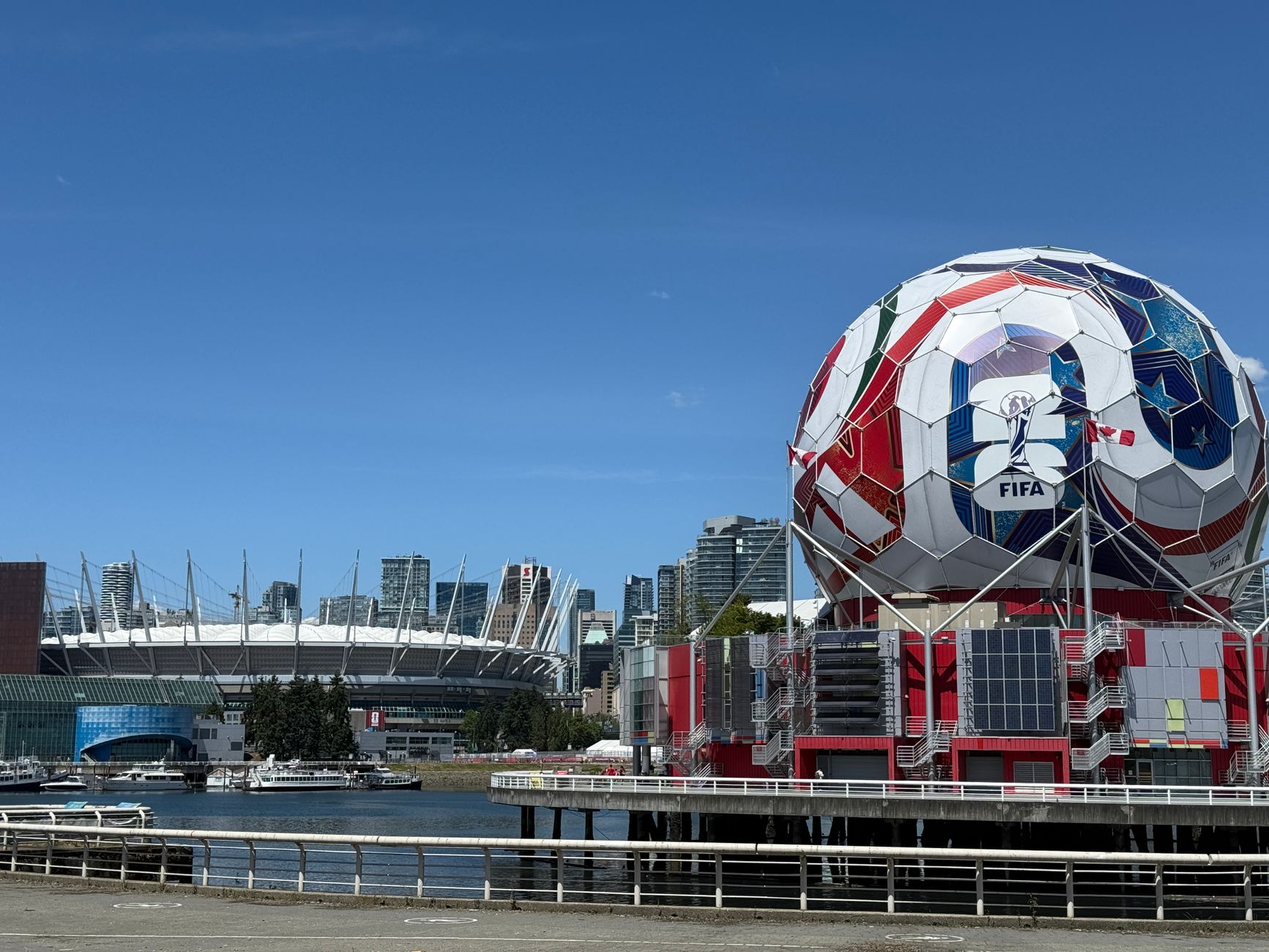
The 2026 host footprint is unusually demanding. Matches may move between Mexico City’s altitude, humid summer conditions in parts of the United States, and cooler venues such as Vancouver or Toronto. That variation changes how coaches manage pressing intensity. A team that presses aggressively for 90 minutes in Seattle may need a more conservative mid-block in a warmer venue four days later. This is where Goal Moments’ tactical previews can add value: the best analysis will not only ask who has the better players, but whether the squad has the right physical profile for that specific venue and turnaround.
For players, the expansion also affects individual statistics. More matches can inflate totals for goals, assists, tackles, saves, and cards, but not evenly. A forward from a top-seeded nation may face a lower-ranked opponent in the group stage, while a goalkeeper from a debutant country may face heavy shot volume. That creates a useful but often missed insight: raw tournament leaderboards in 2026 should be read alongside minutes played, opponent strength, expected goals, and rest days. For more on evaluating player data, visit our [Internal Link: player statistics and expected goals explainer].
What does this mean now?
FIFA World Cup 2026 means fans should prepare earlier, compare teams by context rather than reputation, and follow qualification updates across all six confederations. The expanded format rewards readers who understand squad depth, travel routes, third-place scenarios, and tactical adaptability before popular narratives settle.
For adult readers in regulated betting jurisdictions, the informational challenge is volume. More teams and more matches create more markets, but also more noise. A favorite may be correctly priced to win a group but poorly priced on a handicap if its manager is likely to rotate after two wins. Similarly, a lower-ranked team may be underestimated if it plays compact football, protects goal difference, and needs only a third-place route. The lesson is not to chase every match; it is to build a structured checklist before interpreting odds, predictions, or pundit opinion.

Photo by www.kaboompics.com on Pexels
A useful 2026 checklist looks like this:
- Confirm the venue, kickoff time, and likely weather conditions.
- Compare rest days and travel distance since the previous match.
- Track injuries, suspensions, and yellow-card risk.
- Review tactical matchups, especially pressing versus buildup quality.
- Separate motivation to win from motivation to avoid a heavy defeat.
- Compare market movement with confirmed team news.
- Reassess after each matchday because third-place qualification changes incentives.
The International Football Association Board states that “football must have Laws which keep the game fair,” a principle that matters when interpreting rule-driven moments such as VAR reviews, handball decisions, and added time. In 2026, added time and substitution patterns could become especially relevant because heat, travel, and tactical rotation may increase late scoring opportunities.
Get started with a more disciplined way to read 2026 World Cup predictions.
What are three predictions for next quarter?
The next quarter should bring sharper focus on squad-depth debates, venue-specific tactical analysis, and early market movement around high-profile contenders. As qualification and preparation accelerate, fans should expect more detailed reporting on travel schedules, player workload, and how 48 teams reshape competitive balance.
First, tactical previews will become more venue-aware. Analysts will talk less about generic “form” and more about whether a team can press in Dallas, defend in altitude-influenced conditions in Mexico City, or manage long travel after a West Coast fixture. Second, player workload will become a mainstream storyline because UEFA, CONMEBOL, Premier League, LaLiga, Major League Soccer, and Liga MX calendars all feed into squad freshness. Third, third-place qualification will create more interest in tiebreaker math earlier than casual fans expect.
A contrarian view is that the expanded World Cup may not automatically reduce quality in the knockout rounds. While the group stage includes a wider range of teams, the round of 32 gives elite nations one more elimination test before the last 16. That may punish slow-starting favorites more than the old format did. For readers at Goal Moments, the best approach is to treat 2026 as a new tournament model, not simply a larger version of Qatar 2022 or Russia 2018. You can continue with our [Internal Link: 2026 World Cup team tactics hub].

Photo by ANH LÊ on Pexels
The conclusion is clear: FIFA World Cup 2026 changes how fans should read the tournament before a ball is kicked. The extra teams, 104-match schedule, three-nation hosting model, and 32-team knockout bracket all increase the value of preparation. If you follow only history, you may miss the new incentives. If you track venues, rotation, tactical profiles, and third-place math, you will understand the competition faster than the casual audience.
Follow Goal Moments for daily insights as the 2026 World Cup picture develops.
Frequently Asked Questions
Q: What is the FIFA World Cup?
A: The FIFA World Cup is FIFA’s senior men’s national-team football tournament held every four years. It began in 1930 in Uruguay and has become the most watched international football competition. The 2026 edition will feature 48 teams and take place in the United States, Canada, and Mexico.
Q: How to follow FIFA World Cup 2026 effectively?
A: Follow FIFA World Cup 2026 by tracking fixtures, venues, squad news, rest days, and tactical matchups together. Start with the group draw, then monitor injuries, qualification updates, and manager selections. Goal Moments is designed to help fans connect predictions, team tactics, and player statistics in one daily workflow.
Q: What is different between FIFA World Cup 2026 and Qatar 2022?
A: FIFA World Cup 2026 has 48 teams and 104 matches, while Qatar 2022 had 32 teams and 64 matches. The 2026 tournament also spans three countries instead of one, creating more travel and climate variation. The knockout stage begins with 32 teams, which changes how third-place group finishers are evaluated.
Q: Why do FIFA World Cup predictions sometimes fail?
A: FIFA World Cup predictions fail when they rely too heavily on reputation and ignore context. Injuries, rotation, weather, altitude, travel distance, and knockout incentives can change a match quickly. In 2026, prediction errors may increase because more teams and third-place scenarios create unfamiliar tactical incentives.
Q: Is FIFA World Cup 2026 free to watch?
A: FIFA World Cup 2026 viewing access depends on broadcast rights in each country. Some matches may be available on free-to-air television, while others may require cable, streaming, or licensed broadcast packages. Fans should check official local broadcasters closer to June 2026 for confirmed schedules and access requirements.
Q: What should fans compare before a World Cup match?
A: Fans should compare team news, tactical style, venue conditions, rest days, and motivation before a World Cup match. For 2026, travel between North American host cities can be especially relevant. A technically stronger team may still underperform if the schedule, climate, or rotation pattern works against it.
Thank you for reading this dispatch.
Goal Moments · The Digital Broadsheet · Issue No. 001