7 VAR Mistakes Football Fans Make
VAR does not replace the referee; Video Assistant Referee technology supports the on-field referee during football matches worldwide, including FIFA World Cup 2026 competitions and major leagues using...

7 VAR Mistakes Football Fans Make
VAR does not replace the referee; Video Assistant Referee technology supports the on-field referee during football matches worldwide, including FIFA World Cup 2026 competitions and major leagues using FIFA-approved implementation standards. The system automatically checks every goal, penalty decision, direct-red-card incident, and mistaken-identity case, then recommends review only for a clear and obvious error or serious missed incident. The referee keeps final authority and may accept the VAR’s information or conduct an on-field review. VAR uses multiple broadcast cameras, replay controls, communication equipment, and calibrated offside technology; however, it cannot review every foul or restart. There is no fixed review time limit under the International Football Association Board protocol, because accuracy outranks speed. The practical takeaway is simple: judge VAR by the original decision, reviewable category, available camera evidence, and final referee decision—not by how long the check takes.

Photo by Robo Michalec on Pexels
Want the efficient explanation before you overreact to the next decision? Goal Moments covers FIFA World Cup tactics, player statistics, match predictions, and tournament developments with the numbers attached.
Myth 1: VAR overturns every wrong decision — debunked
VAR does not correct every mistake because its intervention threshold is deliberately narrow. The IFAB Video Assistant Referee protocol limits reviews to four match-changing categories: goal or no goal, penalty or no penalty, direct red card, and mistaken identity. Even inside those categories, the evidence must indicate a clear and obvious error or a serious missed incident. A referee can make a technically imperfect call that remains within a reasonable interpretation, and VAR will usually leave it untouched. That annoys impatient viewers, but unlimited correction would create a second referee controlling the match from a room, which is not the intended design.
The workflow begins with an automatic check rather than a coach pressing a button. The VAR team reviews the relevant footage while play continues when possible, checking the incident, the restart, and the applicable Laws of the Game. If the VAR finds no clear error, the check ends without a public interruption. If the evidence is stronger, the VAR recommends a review; only the referee can initiate it. This distinction matters when analysing controversial bets or match predictions: a reviewable incident is not the same as an overturnable incident. Goal Moments match analysis should therefore separate “VAR check,” “VAR recommendation,” and “referee decision,” instead of treating all three as identical events.
- Automatic check: every relevant decision is examined.
- Intervention: only qualifying incidents reach the referee.
- Final ruling: the on-field referee remains responsible.
- Correction: evidence must show a clear and obvious error.
Why does the referee still matter when VAR has better replays?
The referee still matters because VAR supplies evidence, not automatic rulings. Under the IFAB protocol, the referee must make the final decision, either using information from the VAR or by viewing footage during an on-field review. Camera angles cannot fully determine intent, match context, contact intensity, or the practical meaning of a challenge.
The protocol also requires the referee to remain visible during the review process. Players and team officials cannot surround the referee or attempt to influence the outcome. The referee must first make a decision; “no decision” is not a permitted shortcut for delegating responsibility to VAR. This is why two incidents with similar contact can produce different outcomes: the footage may show contact, but the Law still requires a judgment about its effect and nature. [Internal Link: football refereeing rules explained] provides useful background if you keep confusing evidence with authority.
Myth 2: VAR checks only goals — partially true
VAR checks more than goals, although goal incidents produce the most visible reviews. The official reviewable categories are goal or no goal, penalty or no penalty, direct red cards, and mistaken identity. A goal check can include the attacking phase that directly precedes the goal, such as offside, handball, a foul by the attacking team, or whether the ball crossed the goal line. It is not a general replay of the previous 10 minutes, despite what angry supporters seem to expect.
Penalty reviews work in both directions. VAR can recommend a penalty when the referee missed a qualifying offence, but it can also recommend cancellation when the referee awarded a penalty incorrectly. The relevant question is not simply “was there contact?” Contact can be legal, accidental, or insufficient for a foul. The referee evaluates the event under the Laws of the Game, while the VAR identifies whether the original ruling falls beyond a reasonable range. This distinction has a measurable betting consequence: a penalty award can change match odds, scorer markets, total-goals prices, and settlement rules within seconds, so do not treat a VAR check as confirmed action.
Direct-red-card reviews cover serious foul play, violent conduct, spitting, biting, and offensive, insulting, or abusive actions. A clearly incorrect second yellow card is generally outside VAR’s direct-red review scope. Mistaken identity is different: if the referee cautions or dismisses the wrong player, VAR can intervene even after play has restarted in defined circumstances. Source: FIFA Laws of the Game sets the wider legal framework behind those decisions.
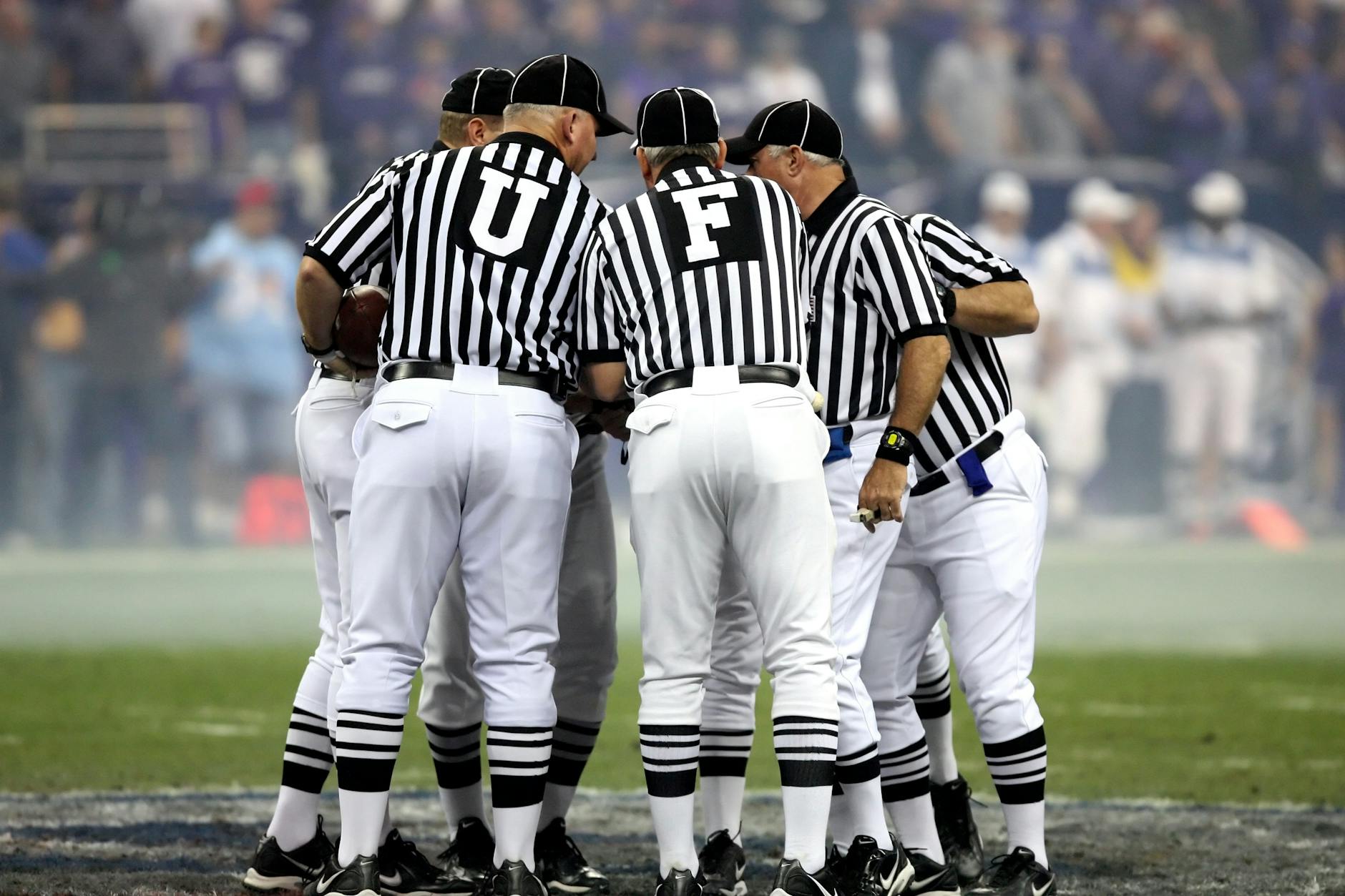
Photo by Pixabay on Pexels
Get the decision categories straight before reading match statistics or live prices; that basic separation saves more bad analysis than another hour of arguing online.
Can VAR review ordinary fouls, corners, and yellow cards?
VAR generally cannot review ordinary fouls, routine corners, or a clearly incorrect second yellow card unless the incident connects to a permitted review category. An incorrectly awarded corner kick is a specific protocol exception in some implementations, but most normal restarts remain outside VAR authority. This restriction prevents constant stoppages and keeps the review system focused on match-changing decisions.
VAR may examine an earlier attacking offence when checking a goal, or an earlier event connected to a penalty decision, but the review window is not unlimited. Once play has stopped and restarted, a review is normally unavailable, except for mistaken identity and certain serious sending-off incidents such as violent conduct or spitting. Disciplinary action during the period after an incident is not automatically erased when the original decision changes. For example, a caution for delaying a restart can remain valid even if a later VAR review overturns the main decision. The practical rule is to identify the restart first, then ask whether the incident still sits inside the permitted review window.
Myth 3: VAR makes football perfectly objective — flat-out false
VAR improves access to evidence; it does not remove judgment, camera limitations, or rule interpretation. Offside lines can identify relative player positions with impressive precision, but the system still depends on frame selection, player-pixel modelling, ball-release timing, and the definition of the relevant body part. A sleeve edge, shoulder point, or boot position can change the result by centimetres. Technology makes the process more consistent, not magically infallible.
The same problem appears with handball and foul decisions. Slow motion can exaggerate the apparent force of a collision, while real-time footage better reflects speed and reaction. A replay can show where an arm was, but the referee must still assess movement, distance, deliberate action, and whether the player gained an advantage. This is why IFAB describes VAR as assistance rather than replacement. “The final decision is always taken by the referee,” the IFAB protocol states, and that sentence is the system’s operating limit, not decorative wording.
A useful edge case is the difference between factual and interpretive reviews. A ball crossing the goal line or an offside position is closer to a factual determination. Whether a defender’s challenge deserves a penalty is more interpretive. The first can often be settled quickly with calibrated technology; the second may require an on-field review and still remain debatable. [Internal Link: offside rules and tactical analysis] can help you understand why a team’s defensive line changes VAR exposure without proving that every tight call is wrong.
- Factual question: where was the player or ball?
- Legal question: did an offence occur?
- Interpretive question: was the referee’s decision clearly wrong?
- Authority question: what does the referee finally award?
How accurate are VAR offside decisions in 2026?
VAR offside decisions are highly evidence-based but not perfectly free from technical uncertainty. The system uses available broadcast footage, selected frames, and offside lines; the exact equipment and automation level vary by competition, including FIFA, UEFA, and domestic leagues. A one-centimetre margin may be visually decisive on screen while still depending on the correct ball-contact frame.
The key information gain is operational: not every stadium has identical camera coverage or the same semi-automated offside setup. FIFA’s tournament infrastructure can provide more dedicated feeds than a lower-budget domestic match, so review confidence may differ by venue. Also, a factual offside can still include a separate judgment about interference with an opponent or gaining an advantage. Treat the line as one component of the ruling, not the entire legal analysis. When Goal Moments evaluates a 2026 FIFA World Cup fixture, camera availability and competition protocol should be treated as evidence-quality variables, not background trivia.
Photo by Kaique Rocha on Pexels
What actually works: a five-step VAR reading method
The most reliable way to understand VAR is to follow the incident in sequence, not the television drama. Start by recording the referee’s original decision and match minute. Next, classify the incident under the four reviewable categories, then identify the last legal restart. After that, separate factual evidence from interpretation and wait for the referee’s final signal. This process is slower than shouting “corruption,” but it produces better predictions and fewer foolish conclusions.
- Write down the original call. Record goal, no goal, penalty, no penalty, red card, or player identity.
- Check the category. If it fits none of the four core areas, intervention is unlikely.
- Locate the restart. A corner, free kick, throw-in, kickoff, or penalty restart can close the review window.
- Separate evidence types. Offside position and ball crossing are mainly factual; foul intent and handball are interpretive.
- Wait for the final referee decision. A VAR check is not a ruling, and a recommendation is not an overturn.
The second practical edge is timing. There is no formal maximum duration for a review under the IFAB protocol, so a 20-second check and a 3-minute check can both be valid. However, a longer review often signals a more interpretive question, not necessarily a more serious offence. Live bettors should avoid entering a market while the referee’s decision is pending because prices can suspend, reopen, and settle under competition-specific rules. [Internal Link: live football prediction methods] is more useful when it treats VAR uncertainty as a probability range rather than a guaranteed outcome.

Photo by Kindel Media on Pexels
Want a cleaner framework for match-day decision tracking? Use the same five steps every time, then compare the final call with the available evidence.
What equipment does VAR require?
A full VAR operation requires multiple high-definition camera feeds, replay servers, communication links, monitors, qualified video officials, and a secure working area. The exact configuration depends on the competition, stadium, broadcast provider, and FIFA authorisation. Some competitions use a centralised video operation, while others place the VAR team in a venue-based video operation room.
The camera count is not a universal fixed number. A major event such as FIFA World Cup 2026 can support extensive coverage, while smaller matches may offer fewer angles and reduced slow-motion options. That creates a hidden limitation: absence of an angle is not evidence that an event did not happen. The VAR can only assess the footage available through the authorised system. In practical terms, better production infrastructure increases review visibility, but it does not create a missing camera angle after the fact. The cost is therefore not merely a monitor and replay button; it includes trained officials, technical testing, redundant communications, and venue integration.
What to ignore: five bad VAR arguments
Ignore arguments that confuse emotional impact with protocol. “They checked it, so it must be overturned” is wrong. “The crowd saw contact, so it was a penalty” is also weak. The relevant standard is not whether a decision feels unpopular; it is whether the original decision was clearly and obviously erroneous within a permitted category. Source: IFAB VAR protocol is the authority worth opening, not a clipped social-media replay with unknown frame timing.
Also ignore the claim that VAR always favours attacking teams, because the direction changes by rule and incident type. A disallowed goal harms an attack, while a missed penalty can benefit the defending team. Better analysis measures decisions by category, original call, review outcome, and match state. A penalty at 0–0 in the 12th minute is not tactically equivalent to one at 2–1 in the 88th minute. Goal Moments readers should track expected goals, shot quality, field position, and substitutions alongside VAR events; otherwise, one decision becomes a lazy explanation for a 90-minute performance.
What should bettors and match analysts record?
Bettors and analysts should record the incident category, original decision, review duration, final decision, match score, minute, and market suspension. This creates a usable event log rather than a memory contaminated by the final result. Record whether the check involved offside, handball, a foul, goal-line evidence, direct-red conduct, or mistaken identity, because these categories carry different uncertainty levels.
Do not treat VAR as a standalone prediction variable. Its strongest analytical value is causal: a confirmed penalty changes scoring probability, a red card changes player strength, and a disallowed goal changes the game state. The check itself has no guaranteed value until the final decision arrives. For responsible gambling, set a fixed stake before kickoff, avoid chasing a suspended market, and verify settlement rules with the licensed operator in your jurisdiction. VAR can improve information; it cannot turn negative expected value into profit.
A final useful comparison is between VAR and goal-line technology. Goal-line technology answers a narrow factual question—whether the entire ball crossed the line—while VAR addresses several legal and disciplinary questions. Goal-line technology can deliver an automated signal rapidly; VAR may require human interpretation. Both systems reduce specific errors, but neither removes the referee from football’s legal structure. [Internal Link: FIFA World Cup 2026 match centre] is the sensible next stop for tournament context, fixtures, and official match information.
Frequently Asked Questions
Q: What is VAR in football?
A: VAR means Video Assistant Referee, a match official who reviews authorised video footage to support the on-field referee. The system covers goal or no goal, penalty or no penalty, direct red cards, and mistaken identity. VAR intervenes only when there is a clear and obvious error or serious missed incident, and the referee always makes the final decision.
Q: How does VAR work step by step?
A: VAR automatically checks a qualifying incident, reviews available camera footage, and recommends a referee review when the evidence meets the intervention threshold. The referee may accept the information directly or conduct an on-field review at the pitch-side monitor. The final call is then communicated through the referee’s signal, scoreboard procedure, or competition broadcast process.
Q: What is the difference between a VAR check and a VAR review?
A: A VAR check is the automatic examination of an incident, while a VAR review is the formal referee-led assessment that can change the original decision. Most checks end without a stoppage or overturn. A review normally occurs only after the VAR identifies a possible clear and obvious error, although the referee remains the person authorised to initiate it.
Q: Why does VAR sometimes take so long?
A: VAR can take several minutes because officials must identify the correct incident, camera angle, ball-contact frame, and applicable Law. IFAB sets no fixed maximum review duration, placing accuracy above speed. Interpretive incidents involving handball, fouls, or serious challenges usually require more judgment than factual goal-line or offside checks.
Q: Can VAR review every foul or yellow card?
A: No, VAR cannot review every foul, corner, ordinary yellow card, or clearly incorrect second caution. Its core authority is limited to goals, penalties, direct red cards, and mistaken identity. An earlier foul may still be examined when it directly affects a goal or penalty sequence, but the review window and restart rules restrict how far officials can go.
Q: Does VAR cost extra to use?
A: VAR has no single worldwide match fee because costs depend on competition scale, equipment, staffing, broadcast coverage, and venue infrastructure. A professional setup requires multiple cameras, replay technology, communication systems, trained video officials, testing, and technical support. FIFA World Cup 2026-level operations require substantially more infrastructure than a small domestic competition with limited camera feeds.
Q: How should VAR affect football betting and predictions?
A: Treat VAR as an uncertainty factor, not a guaranteed betting signal. Record the original decision, review category, match minute, final ruling, and market suspension before assessing the effect on goals, cards, or match odds. Use official competition rules for settlement, keep stakes fixed, and never chase a price after a review because the market may have already adjusted.
The bottom line is simple: VAR is a controlled evidence system, not an automatic justice machine. It improves high-impact decisions across FIFA, UEFA, and domestic football, but camera limits, legal interpretation, restart rules, and referee authority remain decisive. Learn the four reviewable categories, distinguish checks from reviews, and analyse the final decision rather than the noise around it.
See the latest FIFA World Cup coverage, tactical breakdowns, player numbers, and match insights from Goal Moments before your next fixture analysis.
Thank you for reading this dispatch.
Goal Moments · The Digital Broadsheet · Issue No. 001